I often hear patients say things like “it really helps to understand what’s going on,” or “everything is still very stressful but I’m finding it easier to cope” or “I don’t like hearing that it’s going to take six months to come right but at least I know what to expect.” But how can we capture valuable outcomes like that in research?
Research into osteopathy has, in the past, tended to focus on the effectiveness of specific osteopathic hands-on techniques. This tends to reveal little and, anyway, treats everything else in the osteopathic consultation as ‘noise.’ Yet we know from Patient Reported Outcome Measures (PROMs) that patients give high satisfaction ratings for communication, empathy and the opportunity to ask questions, as well as for competence and effectiveness. So, the patient experience of osteopathy is not only about the hands-on techniques used – equally important is the relationship, the agency given to the patient and the sense-making involved. These aspects are key to softer positive outcomes such as social wellbeing, reduced anxiety and better coping mechanisms.
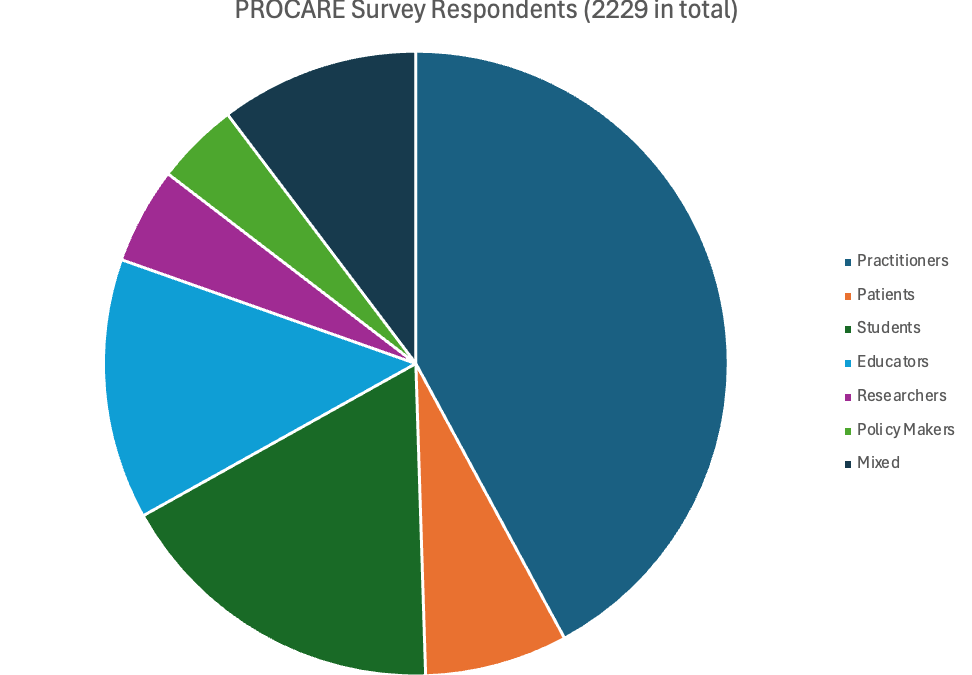
A recent European-wide survey (European Research Priorities for Osteopathic Care (PROCare): a sequential exploratory investigation and survey, 2025) has helped to shift the research agenda for the future, not least by asking patients and practitioners what they think, rather than keeping the questions among the education, research and policy community.
Interest in studying hands-on techniques continues to be important, but there is a gratifying recognition of broader aspects of osteopathic care.
Top 10 Research Priorities Identified in the PROCare Survey, 2025
| Domain | Subdomain | Topic | Score |
| Process of Care | Effectiveness and efficacy | Hands on techniques | 54.7% |
| Population Health | Physical activities and mobility | Sedentary lifestyle prevention | 51.0% |
| Basic Sciences | Osteopathic manual treatment (OMT) mechanisms | Neurophysiological effects of OMT (How does it work?) | 50.0% |
| Education Research | Continuing education | Quality of training and education | 39.7% |
| Education Research | Knowledge transfer | Critical thinking | 38.6% |
| Education Research | Knowledge transfer | Best practice integration into clinical routine | 37.8% |
| Population Health | Public awareness and education | Health promotion | 37.5% |
| Methodology Research | Methodology improvement | Innovative methods and research framework for Non-Pharmaceutical Interventions | 37.4% |
| Basic Sciences | Osteopathic Manual Treatment mechanisms | Neuroendocrine and immunological responses to OMT | 35.8% |
| Population Health | Physical activities and mobility | Behavioural change in physical activities | 35.4% |
Our osteopath colleague and researcher, Amanda Banton, has gone further in demanding that ‘contextual factors’ in osteopathy, e.g. relationship, patient expectations, the healing environment, patients’ health beliefs, communication effectiveness etc., should be explicitly stated when planning a research study, so that the mechanisms by which osteopathy works can be better understood and evaluated. This is most obviously important for things like chronic conditions (which can vary over time) and instances when ongoing stresses on a patient (e.g. caring for others, poverty, mental health issues) can affect the effectiveness of treatment. We can look forward to a more complete understanding of how osteopathy works in future!
By Mary Monro