
It started with a fall off my bike in 2017. I had to cross a road onto a low pavement to follow the cycle path but I was going slowly and the front wheel jinked, I lost my balance and toppled sideways, hitting my ribs on the kerb. I thought I’d only injured my pride, got back on and cycled another 12 miles. It was a few days later, when I heard an ominous ‘clunk’ in the top of my back, that the pain set in. I’d prolapsed the disc between T1 and T2, which would keep me off work for about three months and not fully resolve for a year or two. It was my first experience of chronic pain and I didn’t know how to handle it.
Our beliefs about our pain can make a big difference to our experience of it, and to our recovery. At first, it didn’t feel like I could choose how to think about it – the pain was overwhelming. The GP prescribed painkillers and a sedative, but it was like a sticking plaster for a broken leg. I needed to think again.
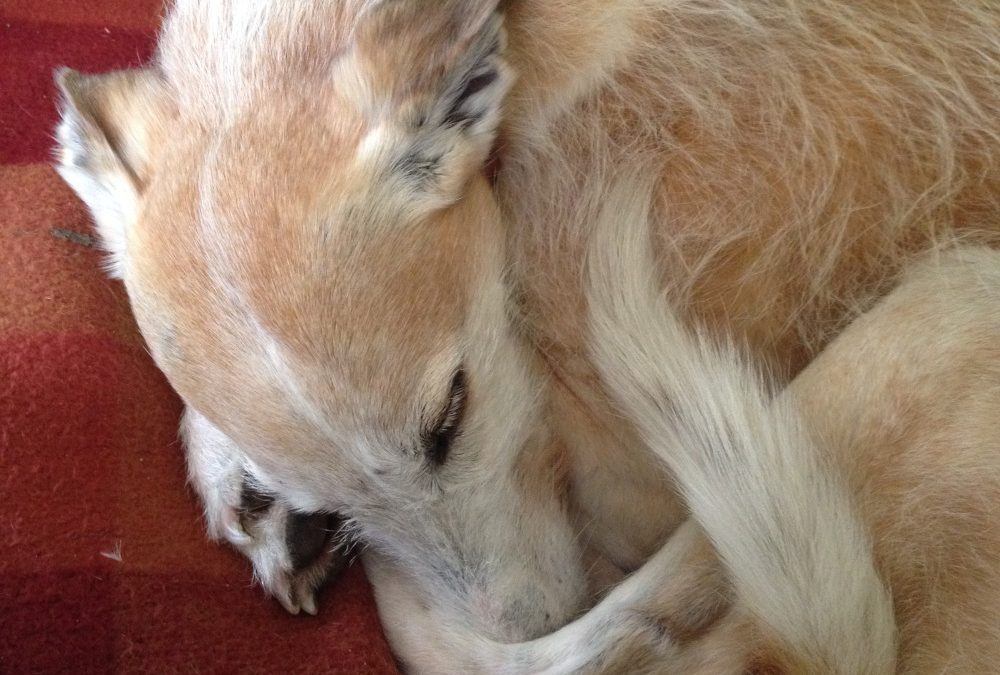
My beloved lurcher, Gobi, was a master at the art of resting and he taught me to relax my body and mind by taking him for a walk in the woods and fields near our home every morning, where immersion in nature could work its healing magic. Then we did resting together, patiently allowing the body to do some repair jobs rather than having to find ways to keep me going. It felt good to regain some agency over the pain and this led me to believe in a future where I would one day feel better.
I wrote a journal every day, chronicling my feelings and reporting on what I had done during the day. The first month’s entries were mainly rage and agony, fragmented sleep and tears of pain and despair. It was good to look back at these early entries though, and to notice that things were slowly improving, even if it didn’t always feel like it.
The game changers were regular osteopathic treatments from dear colleagues, whose gentle support and reassurance helped me to cope, as well as speeding my physical recovery. And, a daily body scan meditation. Spending 20 minutes every morning mentally checking in with every inch of my body completely changed my relationship with the pain. The shouty bits – my upper back and neck – had to wait their turn to receive my attention. The rest of my body finally got a look in, like older children who’ve had to wait for the baby to stop screaming. It evened things out.
For a long time after my initial recovery I lost confidence in my back, believing that it was now vulnerable in a way it hadn’t been before. But with time and regular strength training, my confidence gradually returned. I know that I am lucky not to have lifelong chronic pain or disability but I am grateful for the learning experience of a year of pain, teaching me the value of choosing a healthy pathway through it.
Mary Monro